Signed in as:
filler@godaddy.com
Emotional labor refers to the process of managing one’s emotions to meet the expectations of a role, often requiring individuals to suppress, display, or regulate feelings in ways that align with organizational norms. For principals, this is an essential yet often invisible part of their daily work. They are expected to show patience, care, and composure, even in the face of stress, conflict, or personal challenges.
Principals often face a unique layer of emotional labor as leaders, they must manage their own emotions while also creating an emotionally supportive climate for teachers and students. A lack of emotional support structures for principals increases stress, while supportive environments and professional development on role conflict, emotional exhaustion, emotional regulation, and resilience can buffer the negative effects of emotional labor.
The research underscores that emotional labor is not just an individual burden but a school and district issue that impacts teaching, academic achievement and school culture. Schools, districts and principal preparation programs that acknowledge and address the emotional demands of leadership are better positioned to foster resilience, job satisfaction and retention.
The Emotional Ecology of School Leadership Framework, developed by Naim Sanders, conceptualizes school leadership as an interconnected emotional system in which principals continuously navigate relationships, role expectations, and organizational demands.
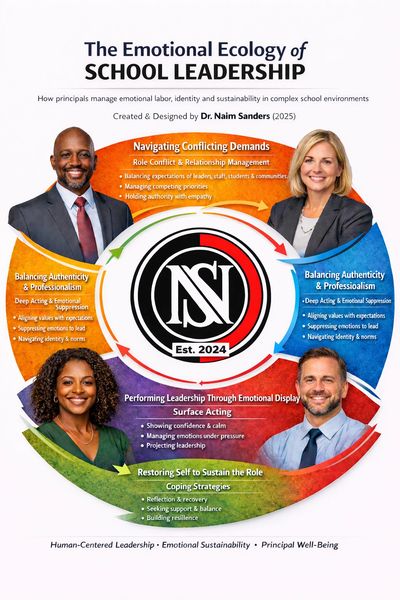

Principals often juggle conflicting roles as leaders, counselors, disciplinarians, nurturers, while facing mounting expectations with limited support. This professional development unpacks how role conflict contributes to burnout and emotional exhaustion in both teaching and leadership. Attendees will examine the signs, sources, and consequences of emotional overload, along with strategies for prevention and recovery. The goal is to help educators sustain their purpose without sacrificing their wellness.
Effective school leadership begins with the ability to communicate with clarity, empathy, and emotional awareness. In this professional development we explore how emotionally intelligent communication strengthens relationships, reduces conflict, and creates a supportive school culture where staff and students can thrive. This engaging session breaks down key components of emotional intelligence, self-awareness, self-regulation, empathy, social awareness and shows how each influences everyday interactions.
School leadership requires not only technical skills but also constant emotional management and resilience. Principals are expected to show care, patience, and composure, even in high-stress environments. In this professional development session we explore the invisible emotional labor that leaders deal with daily and how it impacts well-being, performance, and school culture. Participants will leave with a deeper understanding of emotional labor and its role in sustaining (or draining) the profession.
This practical session equips educators with evidence-based tools to regulate their emotions, navigate challenging interactions, and build healthy relationships. Participants will learn techniques for managing stress in real time, how to strengthen interpersonal dynamics while creating emotional boundaries. Grounded in both research and real-life application, this session helps educators lead with emotional clarity, balance, and strength.
If you would like more information or have questions about tailoring our professional development to meet the needs of your principals or district, please click below.